
Post
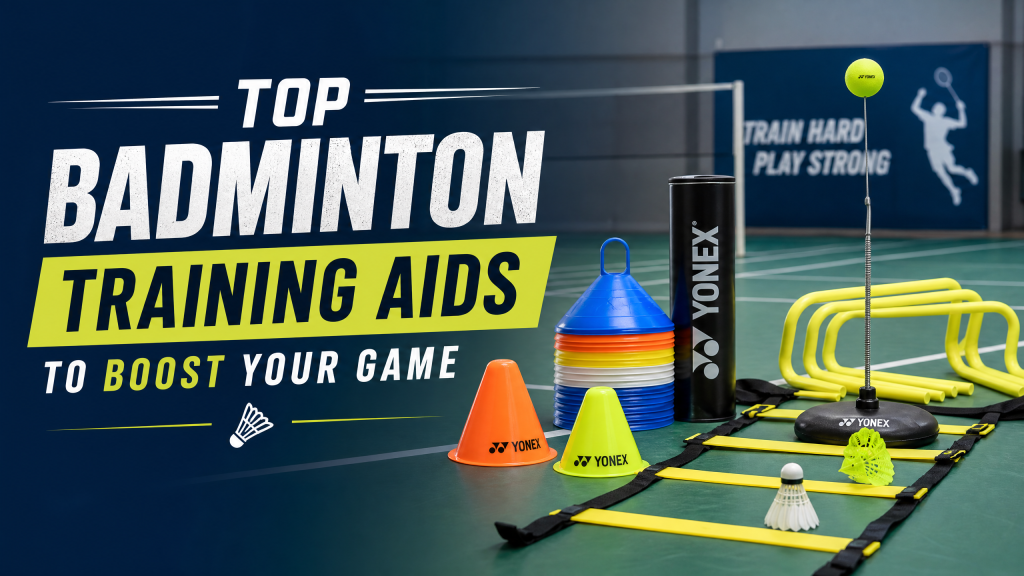
Top Badminton Training Aids to Boost Your Game
May
Accelerate Improvement with Badminton Training Aids
Badminton is one of the fastest racket sports in the world. Quick footwork, explosive movement, fast reactions, and precise technique all work together in every rally. While regular match play helps improve overall experience, many players reach a plateau because they only play games without focused practice. That is where badminton training aids become valuable.
Training equipment allows players to isolate specific skills and practice them repeatedly in a controlled way. Whether you want faster footwork, stronger smashes, better timing, or improved consistency, the right training aids can dramatically accelerate progress. From affordable agility ladders to advanced shuttle launchers, modern badminton training tools are designed to help players of all levels improve more efficiently.
This guide explores the best badminton training aids available today, how they work, who they are suitable for, and how to integrate them into your training routine without wasting money on unnecessary equipment.
Why Training Aids Matter in Badminton
Many badminton players spend years playing matches but never fix their technical weaknesses. During games, you naturally focus on winning points instead of correcting movement patterns. Training aids solve this problem by creating repetitive practice environments that build muscle memory.
Professional badminton athletes use specialized equipment every day because repetition is essential for mastery. Training aids can help improve:
- Footwork speed
- Balance and coordination
- Swing technique
- Wrist strength
- Shot accuracy
- Reaction time
- Endurance
- Recovery movement
Even recreational players can benefit from simple tools. In fact, many inexpensive aids provide excellent value and can be used at home or on court.
Agility Ladders and Cones
Agility ladders and cones are among the most effective and affordable badminton training tools available. They focus mainly on movement quality and court speed.
Agility ladders improve:
- Fast footwork
- Coordination
- Rhythm
- Explosive movement
- Direction changes
Common badminton ladder drills include:
- In-and-out steps
- Lateral shuffles
- Single-leg hops
- Icky shuffle
- Cross-over runs
Cones are equally useful because they simulate movement to court corners. Players can perform shadow footwork drills by moving rapidly between cone markers while maintaining correct badminton posture.
A typical drill may involve:
- Starting in the center base position
- Sprinting to a cone
- Performing a shadow stroke
- Recovering quickly back to center
Just 10–15 minutes of ladder and cone work three times per week can noticeably improve movement efficiency.
Cost range:
- Agility ladder: $15–30
- Cone set: $10–20
These are ideal beginner training aids because they are portable, cheap, and effective.
Rebound Boards and Wall Training
One of the biggest challenges in badminton training is finding a consistent partner. Rebound boards and wall practice solve this issue.
A rebound board is an angled surface that returns the shuttlecock back toward the player. It allows solo practice for:
- Drives
- Net shots
- Reaction speed
- Hand-eye coordination
- Stroke consistency
Players stand several meters away and repeatedly hit the shuttle against the board. Because the shuttle returns quickly, reaction time improves naturally.
Wall training works similarly and is even cheaper. A smooth wall can help players practice:
- Forehand drives
- Backhand drives
- Wrist control
- Flat exchanges
Benefits of rebound training:
- Unlimited repetitions
- Solo practice capability
- Faster reflexes
- Improved timing
DIY rebound boards made from plywood are common among club players, while commercial systems range from $50–120.
For players training alone regularly, rebound boards are one of the best investments.
Shuttle Feeding Machines
Shuttle launchers, also called badminton feeding machines, are advanced tools designed for repetitive multi-shuttle practice.
These machines can:
- Feed clears
- Simulate smashes
- Deliver net shots
- Launch random patterns
- Control frequency and speed
Professional players use shuttle launchers extensively because they allow hundreds of repetitions without exhausting a coach or training partner.
Advantages:
- Consistent feeding
- Adjustable difficulty
- Excellent for technique training
- Great for endurance drills
Common practice uses include:
- Smash repetition
- Defensive drives
- Net kill training
- Footwork endurance sessions
Entry-level launchers cost around $200–400, while advanced programmable systems exceed $1000.
Popular brands include:
- Siboasi
- Royal Master
- SuperMatch
Despite the high price, serious players and coaches often consider shuttle launchers worth the investment.
Weighted Rackets and Swing Trainers
Power development is important in modern badminton, especially for smashes and fast drives. Weighted training tools help strengthen badminton-specific muscles.
Weighted rackets are heavier than normal rackets and are mainly used for:
- Shadow swings
- Wrist strengthening
- Forearm conditioning
- Swing acceleration
However, players should never hit real shuttles repeatedly with very heavy rackets because overuse can cause tendon injuries.
Swing trainers often include:
- Resistance cords
- Elastic ball systems
- Paddle trainers
These tools help players improve:
- Timing
- Swing path
- Wrist pronation
- Shot explosiveness
Recommended usage:
- 2–3 short sets
- 15–20 swings
- Follow immediately with normal racket swings
This creates a “light racket effect” where the standard racket feels faster after resistance training.
Cost:
- Weighted trainers: $25–60
Moderation is important. Overtraining with resistance tools can lead to wrist strain or tennis elbow.
Grip and Wrist Strength Training
Grip strength directly affects shot quality, racket control, and injury prevention.
Strong fingers and wrists improve:
- Smash power
- Defensive stability
- Net shot precision
- Grip switching speed
Popular grip tools include:
- Hand grippers
- Wrist rollers
- Finger resistance bands
- FlexBars
- Tennis balls
A simple wrist routine may involve:
- Wrist curls
- Reverse wrist curls
- Finger extensions
- Pronation exercises
Players should avoid excessive bodybuilding-style forearm training because overly tight muscles reduce flexibility and touch.
Training frequency:
- 2–3 times weekly
- Avoid immediately before matches
Many badminton players underestimate grip training, but it significantly improves racket handling during fast rallies.
Target Mats and Accuracy Training
Badminton is not just about power. Precision wins rallies.
Target mats help players develop placement accuracy by creating visible zones to aim at during practice.
Targets can be placed:
- Near sidelines
- At the back boundary
- Around the net area
- In doubles tramlines
Common drills include:
- Serve accuracy
- Smash targeting
- Net shot placement
- Cross-court drops
Some players use simple DIY methods such as:
- Tape markers
- Towels
- Plastic discs
Commercial target systems cost around $15–30.
These tools are especially useful because they transform vague practice into measurable performance training.
Video Analysis Tools
Video analysis is one of the most underrated training methods in badminton.
Many technical mistakes are difficult to feel during play but become obvious on camera.
Using a smartphone tripod and slow-motion apps, players can analyze:
- Footwork
- Timing
- Swing mechanics
- Recovery movement
- Body posture
Popular apps:
- OnForm
- Coach’s Eye
- Hudl Technique
Advanced sensor systems can also measure:
- Swing speed
- Contact angle
- Racket acceleration
Comparing your strokes with professional players is extremely valuable.
However, players should avoid becoming overly obsessed with perfect form. Feel and adaptability remain important in badminton.
Basic setup cost:
- Smartphone tripod: $15–25
For serious self-improvement, video analysis offers exceptional value.
Balance and Stability Equipment
Badminton places heavy demands on ankle stability and body control. Poor balance increases injury risk and slows recovery movement.
Balance tools include:
- Bosu balls
- Balance boards
- Foam pads
- Resistance bands
Benefits:
- Improved ankle stability
- Better proprioception
- Stronger stabilizer muscles
- Reduced sprain risk
Common exercises:
- Single-leg balance
- Shadow swings on unstable surfaces
- Resistance band lunges
- Lateral band walks
These exercises are especially important for:
- Older players
- Injury recovery
- Junior development
Even 10 minutes twice weekly can improve movement control significantly.
Reaction Training Systems
Reaction speed is critical in doubles badminton where exchanges happen in fractions of a second.
Advanced systems like Blazepod use light-up sensors that players tap during drills. These systems train:
- Reflexes
- Decision-making
- Movement speed
- Visual tracking
Simpler alternatives include:
- Tennis ball drops
- Partner call drills
- Random shuttle feeds
Although expensive, reaction systems are becoming increasingly popular in elite badminton training.
Cost:
- Advanced systems: $200+
For recreational players, simple reaction drills are usually sufficient.
Building a Badminton Training Kit on a Budget
Not every player needs expensive machines. A smart beginner setup can be very affordable.
Under $50 Setup
- Agility ladder
- Cones
- Resistance bands
- Target markers
Under $100 Setup
Add:
- Rebound board
- Wrist trainer
- Tripod for video analysis
Advanced Setup ($200+)
Add:
- Shuttle launcher rental
- Balance board
- Reaction training tools
The best approach is to identify your biggest weakness first.
Examples:
- Slow footwork → ladder and cones
- Weak consistency → rebound board
- Lack of power → weighted training
- Poor accuracy → target mats
Focused training produces faster results than buying random equipment.
How to Integrate Training Aids into Weekly Practice
Training aids work best when used consistently in short sessions.
Example weekly structure:
Monday
- Ladder drills
- Cone footwork
- Wrist training
Wednesday
- Rebound board practice
- Target drills
- Video analysis
Friday
- Match play
- Shuttle feeding drills
- Reaction training
Weekend
- Recovery
- Balance exercises
- Technique review
Even 15–20 minutes of focused practice several times weekly can dramatically improve performance over time.
Conclusion
Badminton training aids are powerful tools for accelerating improvement when used correctly. While regular games are enjoyable, structured skill training helps players develop faster, move better, and reduce injury risk.
The good news is that you do not need expensive professional equipment to improve. Simple tools like agility ladders, cones, rebound boards, and video analysis setups already provide enormous benefits.
Start with affordable essentials, train consistently, and focus on your weaknesses one step at a time. Over months of dedicated practice, the improvements in speed, technique, consistency, and confidence become very noticeable.
Smart training beats endless casual games. Use the right tools, follow a structured routine, and your badminton level will improve far more quickly than you expect.
