
Post
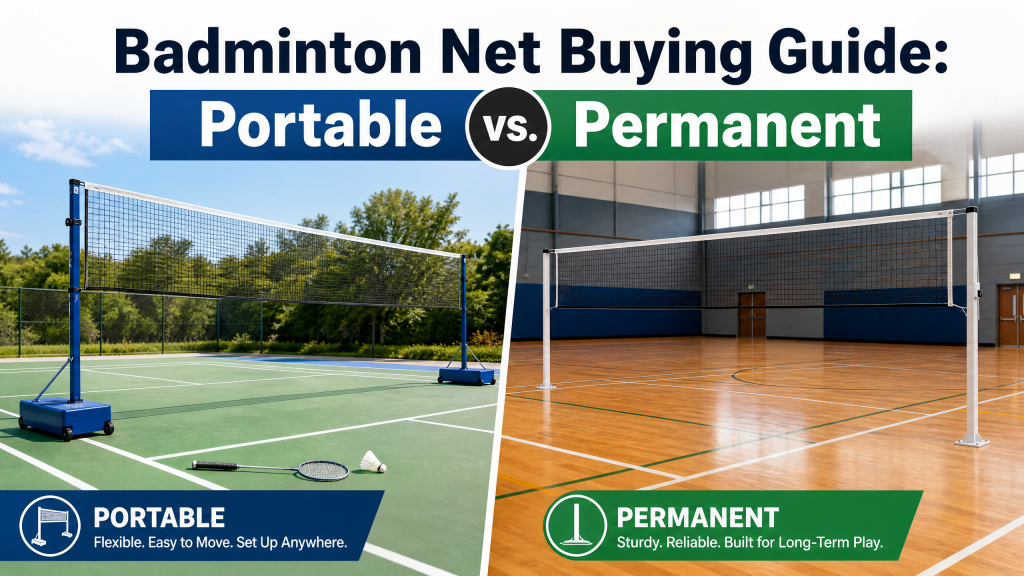
Badminton Net Buying Guide: Portable vs. Permanent
May
Choosing the Right Badminton Net: Portable vs Permanent Systems
A badminton net may seem simple, but it has a major impact on the overall playing experience. A poor-quality net can sag, shift during rallies, or wear out quickly, while a properly tensioned and correctly installed net creates a professional feel and ensures fair gameplay.
Whether you are setting up:
- A backyard court
- A school gym
- A community center
- A professional badminton hall
choosing the right net system matters.
This guide explains:
- Portable vs permanent badminton nets
- Official BWF specifications
- Net materials and durability
- Indoor vs outdoor setups
- Installation tips
- Maintenance advice
- Safety considerations
- Budget recommendations
By the end, you’ll know exactly which badminton net system best fits your needs.
Why a Quality Badminton Net Matters
The net is the center of every badminton rally.
A poorly designed or badly tensioned net affects:
- Shot accuracy
- Service consistency
- Match realism
- Player safety
Common problems with cheap nets include:
- Excessive sagging
- Weak mesh
- Tipping poles
- Rusted cables
- Poor tension retention
A proper net system improves:
- Court appearance
- Consistency
- Durability
- Overall playing enjoyment
For serious players, a high-quality net creates a more authentic competitive environment.
The Two Main Types of Badminton Nets
Badminton net systems are divided into two main categories:
- Portable net systems
- Permanent installations
Each has different advantages depending on your court setup and budget.
Portable Badminton Net Systems
Portable badminton nets are temporary systems designed for:
- Home use
- Schools
- Parks
- Multi-purpose gyms
- Recreational play
They typically include:
- Net
- Two poles
- Base system
- Carry bag
Setup usually takes:
- 5–10 minutes
Advantages of Portable Nets
The biggest advantage is flexibility.
Portable nets can be:
- Moved easily
- Stored after use
- Used indoors or outdoors
They are ideal for players who:
- Lack a permanent court
- Need temporary setups
- Want a transportable system
They also require:
- No drilling
- No construction
- No permanent modifications
Disadvantages of Portable Nets
Portable systems are generally:
- Less stable
- Less durable
- Less tensioned
Compared to permanent systems.
Inexpensive portable nets often:
- Tilt during play
- Lose tension quickly
- Move during impact
This affects gameplay quality.
Portable Net Base Systems
Portable systems usually use:
- Weighted bases
- Water-fill bases
- Sand-fill bases
- Ground stakes
Wide Bases Matter
A stable portable net should have:
- Bases wider than 60 cm
Narrow bases are easier to tip over when:
- Players collide with poles
- Wind increases outdoors
- The net is pulled tightly
Pole Materials
Portable net poles are commonly made from:
- Aluminum
- Steel
Aluminum Poles
Advantages:
- Lightweight
- Rust resistant
- Easy to transport
Disadvantages:
- Slightly less stable
Best for:
- Casual use
- Travel
- Recreational players
Steel Poles
Advantages:
- Stronger
- More stable
- Better for windy conditions
Disadvantages:
- Heavier
- Harder to move
Best for:
- Frequent setups
- Schools
- Clubs
Permanent Net Installations
Permanent systems are commonly used in:
- Dedicated badminton halls
- Professional clubs
- Tournament venues
These systems use:
- Fixed posts
- Floor anchors
- Wall mounts
The net remains installed permanently.
Advantages of Permanent Nets
Permanent installations provide:
- Excellent tension consistency
- Professional appearance
- Maximum stability
- Better durability
They also save setup time because:
- The court is always ready
This creates a more authentic playing environment.
Disadvantages of Permanent Nets
Permanent systems require:
- Construction
- Installation work
- Higher cost
They also:
- Cannot be moved easily
- Need dedicated court space
For casual home users, permanent systems are usually excessive.
Official BWF Net Specifications
The Badminton World Federation (BWF) defines official net standards.
Official Net Dimensions
Official badminton net size:
- Width: 6.1 meters (20 feet)
- Depth: 0.76 meters (2.5 feet)
These dimensions are used for:
- Singles
- Doubles
Net Height
Official heights:
- At posts: 1.55 meters
- At center: 1.524 meters
The slight center dip is intentional and standardized.
Mesh Requirements
Official mesh size:
- 15–20 mm square mesh
The mesh should be:
- Uniform
- Strong
- Non-stretching
Net Color
Official nets should be:
- Dark colored
Usually:
- Black
- Dark brown
This improves shuttle visibility during play.
Top Tape Design
The top edge includes:
- 75 mm white tape
A cable or cord runs through the tape for tensioning.
Indoor vs Outdoor Badminton Nets
Indoor and outdoor environments place different demands on net materials.
Outdoor Net Requirements
Outdoor nets must resist:
- UV rays
- Rain
- Humidity
- Wind
The best outdoor mesh material is:
- HDPE (High-Density Polyethylene)
Especially with:
- UV treatment
- Carbon black additives
Why UV Resistance Matters
Sunlight weakens untreated mesh quickly.
Poor-quality outdoor nets may:
- Fade
- Crack
- Become brittle
within months.
UV-resistant materials dramatically improve lifespan.
Indoor Net Materials
Indoor nets commonly use:
- Polyester mesh
Advantages:
- Softer feel
- Lightweight construction
- Better appearance
However:
- Less weather resistant
Indoor nets should never remain outdoors long-term.
Setting Up a Portable Net Properly
Correct setup greatly improves:
- Stability
- Tension
- Gameplay quality
Step 1: Choose Flat Ground
Uneven surfaces create:
- Pole instability
- Uneven net height
- Poor tension
Always set up on:
- Flat grass
- Smooth court flooring
- Level surfaces
Step 2: Extend Poles Correctly
Ensure poles reach:
- 1.55 meters at the ends
Double-check height before tensioning.
Step 3: Secure the Bases
Fill bases with:
- Sand
- Water
or use:
- Ground stakes for grass
Extra weight improves stability outdoors.
Step 4: Tension the Net
Attach the top cable securely and tighten:
- Side straps
- Winches
- Tension cords
The net should remain:
- Straight
- Firm
- Without sagging
Step 5: Adjust the Center Height
Use the center strap to lower the middle section to:
- 1.524 meters
Proper center height is critical for realistic gameplay.
Net Tension: Why It Matters
A properly tensioned net:
- Improves consistency
- Prevents shuttle trapping
- Feels professional
Loose nets:
- Distort during rallies
- Create unfair bounces
- Reduce realism
Wind Considerations Outdoors
Outdoor badminton is challenging because shuttles are extremely wind-sensitive.
Strong wind also affects:
- Net stability
- Pole balance
Outdoor setups may require:
- Extra sandbags
- Ground anchors
- Heavier poles
Maintaining Your Badminton Net
Regular maintenance extends net lifespan significantly.
Cleaning the Net
Use:
- Mild soap
- Warm water
- Soft cloth
Avoid:
- Harsh chemicals
- Abrasive brushes
Always allow the net to:
- Dry completely before storage
to prevent mold and mildew.
Inspecting for Damage
Check regularly for:
- Frayed cables
- Torn mesh
- Broken stitching
- Cracked tension straps
Replace damaged parts early before failure worsens.
Pole Maintenance
For portable systems:
- Lubricate joints occasionally
- Check locking mechanisms
- Remove dirt from telescopic sections
For permanent systems:
- Oil winch mechanisms
- Check anchor stability
Typical Net Lifespan
Expected lifespan:
- Indoor nets: 2–5 years
- Outdoor nets: 1–2 years
depending on:
- Usage frequency
- Weather exposure
- Maintenance quality
Popular Portable Badminton Net Systems
Several brands produce reliable badminton net systems.
Popular options include:
- Yonex portable systems
- Park & Sun Sports net systems
- EastPoint Sports badminton sets
Budget Portable Nets
Entry-level systems are suitable for:
- Casual backyard games
- Family recreation
- Light use
However, very cheap nets often suffer from:
- Weak poles
- Poor stability
- Fast wear
Spending slightly more usually improves quality dramatically.
Permanent Installation Tips
For permanent courts, accurate installation is essential.
Correct Post Placement
Posts should align:
- Exactly with the doubles sidelines
Distance between posts:
- 6.1 meters
Floor Anchoring
Floor-mounted posts usually require:
- Deep anchor holes
- Expansion bolts
- Concrete reinforcement
Professional installation is recommended.
Wall-Mounted Systems
Wall-mounted systems:
- Save floor space
- Reduce clutter
But require:
- Strong reinforced walls
Not all gym walls can safely support tension loads.
Adjustable Height Nets
Some systems allow:
- Height adjustment
Useful for:
- Children
- Schools
- Recreational play
Junior training often uses slightly lower nets.
However, official competition requires:
- Standard BWF height
Safety Considerations
Net systems can become dangerous if poorly installed.
Padding the Posts
Always use:
- Pole padding
- Foam covers
especially in competitive environments.
Players may collide with posts during lunges.
Preventing Tip-Over Accidents
Portable nets should be:
- Properly weighted
- Fully secured
Tippy systems are unsafe during fast play.
Cable Protection
Exposed metal cables may cause:
- Cuts
- Scratches
Protective sleeves improve safety.
Child Safety
Lower or remove nets when children are unsupervised.
Children may:
- Climb poles
- Pull cables
- Become entangled
Budget Recommendations
Under $80
Best for:
- Casual backyard play
- Occasional use
Expect:
- Basic stability
- Simpler construction
$80–150
Best balance of:
- Durability
- Stability
- Value
Ideal for most recreational players.
$150+
Suitable for:
- Clubs
- Schools
- Frequent use
Usually includes:
- Better tension systems
- Stronger poles
- Longer lifespan
Portable vs Permanent: Which Should You Choose?
Choose Portable If:
- You need flexibility
- You play casually
- You lack permanent court space
- You want lower cost
Choose Permanent If:
- You own a dedicated court
- You play frequently
- You want tournament-quality setup
- You prioritize stability
Final Thoughts
A badminton net is one of the most important parts of any court setup. The right system improves:
- Gameplay quality
- Safety
- Durability
- Convenience
For most recreational players:
- A solid portable net system offers excellent value.
For clubs and serious facilities:
- Permanent installations provide the best professional experience.
Whatever system you choose, prioritize:
- Stability
- Proper tension
- Durable materials
- Correct dimensions
A well-installed net makes every rally feel smoother, fairer, and more enjoyable.
