
Post
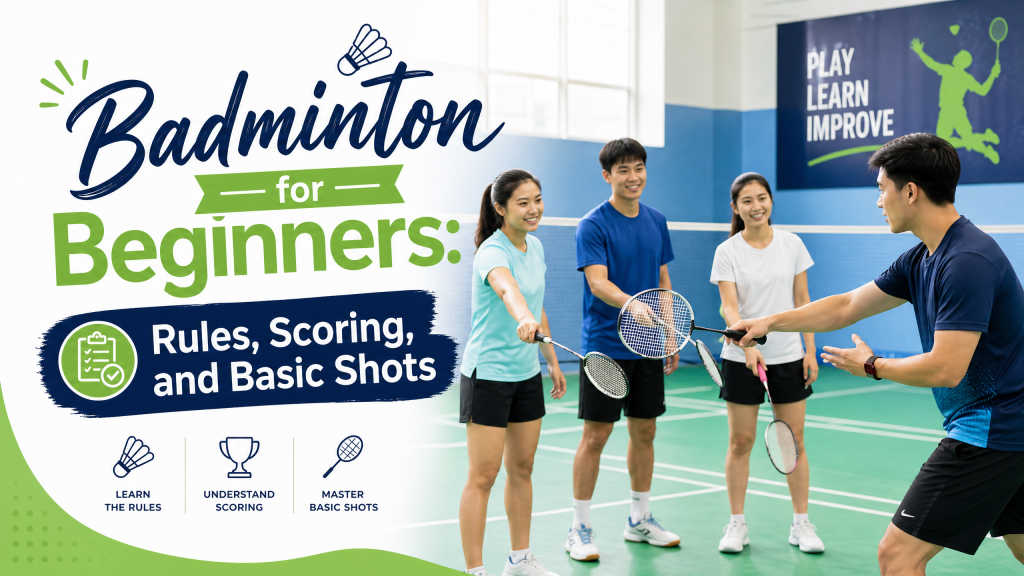
Badminton for Beginners: Rules, Scoring, and Basic Shots
May
Welcome to the Fastest Racket Sport
Badminton is one of the most exciting and accessible sports in the world. It combines speed, agility, strategy, and endurance in a way that few sports can match. Whether you are looking for a fun hobby, a social activity, or a competitive challenge, badminton is an excellent choice. The best part is that beginners can start enjoying rallies within their very first session, while advanced players can spend years refining technique and tactics.
This beginner’s guide covers everything you need to know to start playing badminton confidently. From understanding the court and rules to learning basic shots and footwork, you’ll have a strong foundation for your badminton journey.
Understanding the Court and Equipment
Before stepping onto the court, it’s important to understand the basic layout and equipment used in badminton.
A standard badminton court measures 13.4 meters long. In doubles, the width is 6.1 meters, while singles uses a slightly narrower court. The net height is 1.55 meters at the posts and slightly lower in the center.
The court is divided into several important areas:
- Front court near the net
- Mid court
- Rear court
- Left and right service courts
As a beginner, you do not need expensive equipment. A simple setup is enough to start learning properly.
Essential Beginner Equipment
Badminton Racket
Choose a lightweight racket that feels comfortable in your hand. Aluminum or entry-level graphite rackets are perfect for beginners because they are affordable and forgiving.
Shuttlecocks
There are two main types:
- Nylon shuttles – durable and ideal for beginners
- Feather shuttles – used in advanced and professional play
Most new players should begin with nylon shuttlecocks because they last longer and require less maintenance.
Shoes
Proper court shoes are extremely important. Badminton involves sudden stops, lunges, and quick direction changes. Running shoes are not ideal because they lack lateral support. Instead, wear badminton or indoor court shoes with non-marking soles.
Clothing
Comfortable athletic clothing is sufficient. Breathable shirts and flexible shorts allow better movement during rallies.
Learning the Scoring System
Modern badminton uses the rally point scoring system, which means every rally results in a point.
A match is usually played as:
- Best of 3 games
- Each game goes to 21 points
If the score reaches 20-20, a player or team must win by 2 points. However, if the score reaches 29-29, the next point wins the game.
Serving Rotation
Serving can confuse beginners at first, but it becomes natural with practice.
- If your score is even (0, 2, 4, 6…), serve from the right side.
- If your score is odd (1, 3, 5…), serve from the left side.
In singles:
- One player covers the entire court.
In doubles:
- Partners rotate service positions depending on who wins the rally.
At first, focus more on enjoying rallies than memorizing every serving detail perfectly.
Basic Serving Rules
The serve starts every rally, making it one of the most important skills in badminton.
Key serving rules include:
- The shuttle must be hit below waist level.
- Both feet must remain on the floor during the serve.
- The shuttle must land diagonally across the court.
Singles vs Doubles Service Areas
In singles:
- The court is long and narrow.
In doubles:
- The court is shorter for serves but wider during rallies.
Beginners often make these common serving mistakes:
- Hitting above waist level
- Serving too high
- Stepping during the serve
Practicing serves regularly builds consistency and confidence.
The Four Basic Badminton Shots
Learning the basic strokes is the foundation of badminton improvement.
1. Clear Shot
The clear is a high shot that sends the shuttle deep into the opponent’s back court.
Purpose:
- Gain time to recover
- Push opponent backward
- Reset the rally
Every beginner should learn the clear first because it develops timing and proper hitting technique.
2. Drop Shot
A drop shot travels softly and lands near the opponent’s front court.
Purpose:
- Force opponent to move forward
- Create variation
- Slow down fast rallies
Good drop shots look similar to clears until the last moment.
3. Smash
The smash is badminton’s most powerful attacking shot.
Purpose:
- Finish rallies
- Force weak returns
- Pressure opponents
Beginners should focus on correct technique before trying maximum power.
4. Net Shot
Net shots are delicate touches played close to the net.
Purpose:
- Control the front court
- Force lifts
- Create attacking opportunities
Good net play requires soft hands and precise control.
Beginner Footwork Fundamentals
Footwork is often more important than raw power in badminton. Players who move efficiently reach shuttles earlier and maintain better balance.
Basic Footwork Principles
Stay in Base Position
After every shot, return toward the center of the court.
Use Small Adjustment Steps
Quick small steps improve balance and reaction time.
Lunge Correctly
Use your racket foot to lunge toward front court shots.
Avoid Running Backward
Turn sideways and move efficiently instead of backpedaling.
At first, movement may feel awkward. That is completely normal. Consistent practice gradually improves speed and coordination.
Singles vs Doubles Gameplay
Although the same court is used, singles and doubles feel very different.
Singles
- Requires stamina and court coverage
- Longer rallies
- More strategic placement
Singles helps beginners improve movement and consistency.
Doubles
- Faster pace
- Greater emphasis on reactions
- Requires communication with partner
Doubles is often more social and exciting for recreational players.
Important Badminton Etiquette
Good sportsmanship is an important part of badminton culture.
Basic Etiquette Rules
- Warm up before matches
- Shake hands after games
- Respect line calls
- Avoid disturbing nearby courts
- Apologize for accidental body shots
- Do not walk behind active courts during rallies
Being respectful makes the game more enjoyable for everyone.
Common Beginner Mistakes
Every beginner struggles with certain habits. Recognizing them early helps accelerate improvement.
Gripping Too Tightly
A tight grip reduces wrist flexibility and causes fatigue.
Using Only Arm Power
Badminton power comes from technique, rotation, and timing — not brute force.
Standing Upright
Stay slightly bent and ready to move.
Hitting Late
Try to contact the shuttle in front of your body whenever possible.
Forgetting Recovery
Always return toward base position after each shot.
Focus on correcting one mistake at a time rather than everything at once.
How Beginners Should Practice
Improvement comes from repetition and consistency.
Solo Practice Ideas
Wall Rally
Hit against a wall to improve timing and control.
Shadow Footwork
Practice movement patterns without a shuttle.
Serve Practice
Hit 50 serves each session to build consistency.
Partner Practice
Focus on cooperative rallies instead of winning points immediately. Try goals like:
- 10-shot rally
- 20-shot rally
- Controlled clears only
Consistency is more valuable than power at the beginner stage.
Beginner Equipment Recommendations
New players often waste money on advanced gear they do not yet need.
Recommended Beginner Setup
Racket
- Entry-level graphite racket
- Medium flexibility
- Even balance
Shuttlecocks
- Nylon shuttles for durability
Shoes
- Indoor court shoes with grip and cushioning
Accessories
- Overgrip for comfort
- Small towel
- Water bottle
Avoid professional-level rackets with extreme stiffness or high string tension. They are difficult for beginners to use effectively.
Physical and Mental Benefits of Badminton
Badminton provides outstanding health benefits:
- Improves cardiovascular fitness
- Burns calories
- Enhances coordination
- Builds agility
- Reduces stress
- Improves reaction speed
Because rallies involve constant movement and concentration, badminton trains both body and mind simultaneously.
Final Thoughts
Badminton is easy to start but endlessly rewarding to improve. In your first few sessions, focus on:
- Learning basic rules
- Developing consistent contact
- Moving efficiently
- Enjoying the game
Do not worry about advanced techniques immediately. Every skilled player once struggled with serves, timing, and footwork too.
The key is consistent practice and patience. Find a local court, grab a racket, and start playing. Within a few weeks, rallies will feel smoother, movement will improve, and your confidence will grow.
Most importantly, have fun. Badminton is not just a sport — it’s a lifelong activity that combines fitness, competition, and community in one incredibly fast-paced game.
