
Post
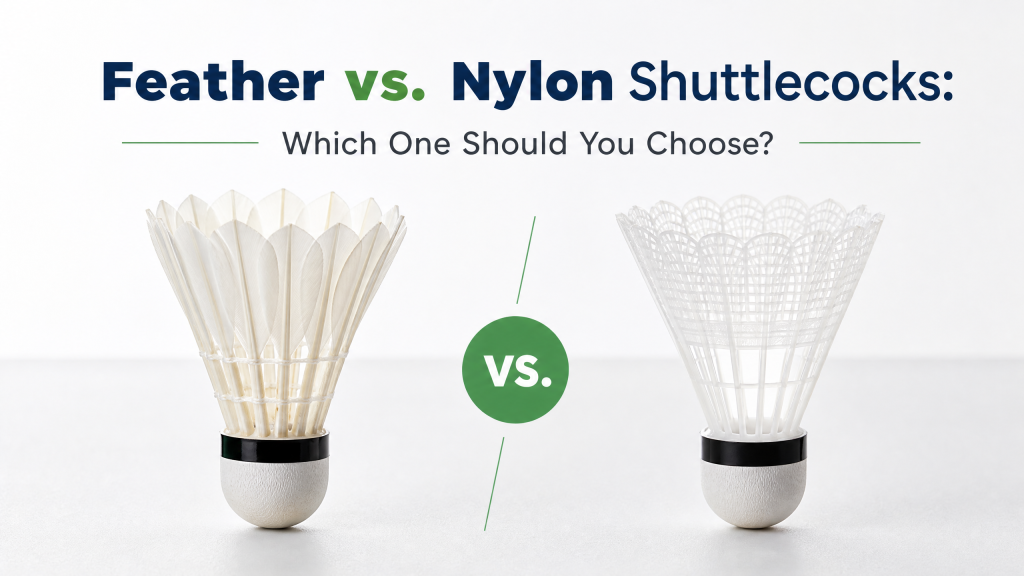
Feather vs. Nylon Shuttlecocks: Which One Should You Choose?
May
Understanding Shuttlecock Construction: Feather vs. Nylon Shuttlecocks
Shuttlecocks are the heart of badminton. Unlike most racket sports where the ball lasts for hours, badminton shuttles are consumable equipment that directly affects speed, control, consistency, and overall playing experience. Choosing the right shuttlecock can dramatically change the quality of your matches and training sessions.
Today, two major categories dominate the market: feather shuttlecocks and nylon (plastic) shuttlecocks. Each type has unique characteristics, advantages, disadvantages, and ideal use cases. Professional tournaments rely exclusively on feather shuttles, while recreational players often choose nylon for durability and affordability.
This guide explains how shuttlecocks are made, how they fly, their cost differences, maintenance tips, and which option best suits your level and budget.
What Is a Shuttlecock Made Of?
A badminton shuttlecock consists of two main components:
- The skirt – the feather or plastic section responsible for aerodynamics
- The base – usually cork or composite cork that contacts the racket strings
The shuttle’s unusual cone shape creates drag, making badminton the fastest racket sport in the world while still allowing precise control. Even small differences in materials significantly affect flight behavior.
Feather Shuttlecocks: The Professional Standard
Construction and Materials
Feather shuttlecocks are traditionally made using:
- 16 goose feathers
- A natural cork base
- Thread and adhesive reinforcement
Most premium shuttles use feathers exclusively from the left wing of geese because matching feather curvature improves flight consistency.
High-end models are carefully sorted for:
- Feather stiffness
- Weight consistency
- Symmetry
- Speed rating
This precision explains why professional-grade feather shuttles are expensive.
Why Professionals Prefer Feather Shuttles
Feather shuttlecocks provide:
- Superior control
- Better spin response
- More natural trajectory
- Cleaner net tumbles
- Accurate touch shots
- Smoother deceleration
One of the biggest advantages is how feathers interact with air resistance. After impact, the shuttle slows naturally and predictably, helping players control clears, drops, and net shots with exceptional precision.
This flight behavior is essential for advanced tactical badminton.
Professional tournaments exclusively use feather shuttlecocks because elite-level rallies depend heavily on precise shuttle behavior.
The Distinctive Sound and Feel
Experienced players immediately notice the difference in sound.
Feather shuttles produce a crisp:
“thwack”
Nylon shuttles produce a duller:
“thud”
The feeling off the strings is also different. Feather shuttles feel softer, cleaner, and more responsive during impact.
This sensory feedback helps advanced players judge shot quality instantly.
The Biggest Weakness: Durability
The major downside of feather shuttlecocks is fragility.
Feathers break easily from:
- Mishits
- Smash practice
- Racket clashes
- Dry environments
- Poor storage
A single hard smash can split a feather and ruin flight consistency.
Competitive doubles players may use multiple shuttles during one match. Serious clubs can consume dozens of tubes weekly.
Because of this, feather shuttlecocks are expensive to maintain long-term.
Nylon Shuttlecocks: Affordable and Durable
Construction
Nylon shuttlecocks replace feathers with a molded plastic skirt.
Most include:
- Nylon or synthetic polymer skirt
- Cork or synthetic base
- Reinforced frame structure
Popular examples include:
- Yonex Mavis 350
- Yonex Mavis 2000
- Li-Ning A+60
Why Recreational Players Love Nylon
Nylon shuttlecocks are incredibly durable.
One shuttle can survive:
- Weeks of casual play
- Repeated mishits
- Outdoor sessions
- Beginner training
This makes them ideal for:
- Schools
- Beginners
- Community centers
- Family games
- Coaching drills
For players who practice often on a budget, nylon is far more economical.
Flight Differences Compared to Feather
Nylon shuttlecocks fly differently because plastic skirts generate different aerodynamic drag.
Compared to feather shuttles, nylon tends to:
- Travel faster
- Stay flatter
- Maintain speed longer
- Drop more abruptly
This changes timing and shot feel significantly.
Advanced players often dislike nylon because:
- Net shots feel less precise
- Drops do not tumble naturally
- Clears behave differently
- Smashes feel less responsive
However, beginners may not notice these differences initially.
Feather vs. Nylon: Key Comparison
| Feature | Feather | Nylon |
|---|---|---|
| Flight quality | Excellent | Good |
| Durability | Low | Very high |
| Cost per shuttle | Expensive | Affordable |
| Net play | Superior | Average |
| Smash feel | Crisp | Duller |
| Beginner-friendly | Moderate | Excellent |
| Tournament use | Yes | Rare |
| Weather resistance | Sensitive | More stable |
Understanding Shuttle Speed Ratings
Both feather and nylon shuttlecocks use speed ratings:
- 75 / 76 = slower
- 77 = medium
- 78 / 79 = faster
The correct speed depends on:
- Temperature
- Altitude
- Humidity
Cold air slows shuttle flight, so faster shuttles are needed.
General guideline:
- Hot climates → slower shuttles
- Cold climates → faster shuttles
Most clubs use:
- Speed 77 at normal conditions
- Speed 78 in colder halls
How to Extend Feather Shuttle Life
Feather shuttlecocks require proper care.
1. Humidify Before Use
Dry feathers become brittle.
Some players lightly steam new shuttles for:
5–10 seconds
This softens feathers and reduces breakage.
2. Store Properly
Ideal storage:
- Cool environment
- Moderate humidity
- Tube kept upright
Avoid:
- Hot cars
- Direct sunlight
- Air-conditioned dryness
3. Rotate Shuttles During Play
Using multiple shuttles alternately reduces stress on individual feathers and improves lifespan.
Cost Analysis: Which Is Better Value?
Feather Shuttle Costs
Typical prices:
- Mid-range feather: $25–40 per tube
- Premium feather: $40–50+ per tube
Competitive players can easily spend hundreds annually.
Nylon Shuttle Costs
Typical prices:
- $15–20 per tube
Because each shuttle lasts much longer, nylon offers dramatically lower long-term cost.
For recreational players, nylon is usually the smarter financial decision.
Best Shuttlecock Recommendations
Best Feather Shuttlecocks
Yonex Aerosensa 30
Excellent balance between performance and durability for club players.
Yonex Aerosensa 50
Professional-level tournament shuttle with elite consistency.
Victor Master No.1
Popular among advanced club and tournament players.
RSL Classic Tourney
Budget-friendly feather option.
Best Nylon Shuttlecocks
Yonex Mavis 350
The most widely used nylon shuttle in the world.
Yonex Mavis 2000
More durable and slightly slower than the 350.
Li-Ning A+60
Good value alternative with consistent flight.
Environmental Considerations
Feather shuttlecocks use natural materials and are biodegradable, but they consume large quantities of feathers.
Nylon shuttlecocks are plastic-based and non-biodegradable, but their longevity reduces waste frequency.
Some manufacturers now offer:
- Recycled nylon programs
- Eco-friendly synthetic materials
- Reduced-plastic packaging
The badminton industry continues searching for sustainable alternatives.
Which Shuttlecock Should You Choose?
Choose Nylon If:
- You are a beginner
- You play casually
- You train outdoors
- You want low cost
- You prioritize durability
Choose Feather If:
- You compete seriously
- You value control and touch
- You practice advanced techniques
- You want authentic badminton feel
Hybrid Approach
Many intermediate players use:
- Nylon for drills and practice
- Feather for matches
This balances cost and performance effectively.
Final Thoughts
There is no universally “best” shuttlecock — only the best option for your needs.
Feather shuttlecocks deliver unmatched feel, control, and professional-level flight, but require higher spending and maintenance. Nylon shuttlecocks offer incredible durability and affordability, making them ideal for beginners and recreational play.
If you are new to badminton, start with quality nylon shuttles like the Yonex Mavis 350. As your technique improves, gradually transition into feather shuttlecocks to experience true competitive badminton performance.
The shuttlecock you choose shapes the speed, rhythm, and enjoyment of every rally.
