
Post
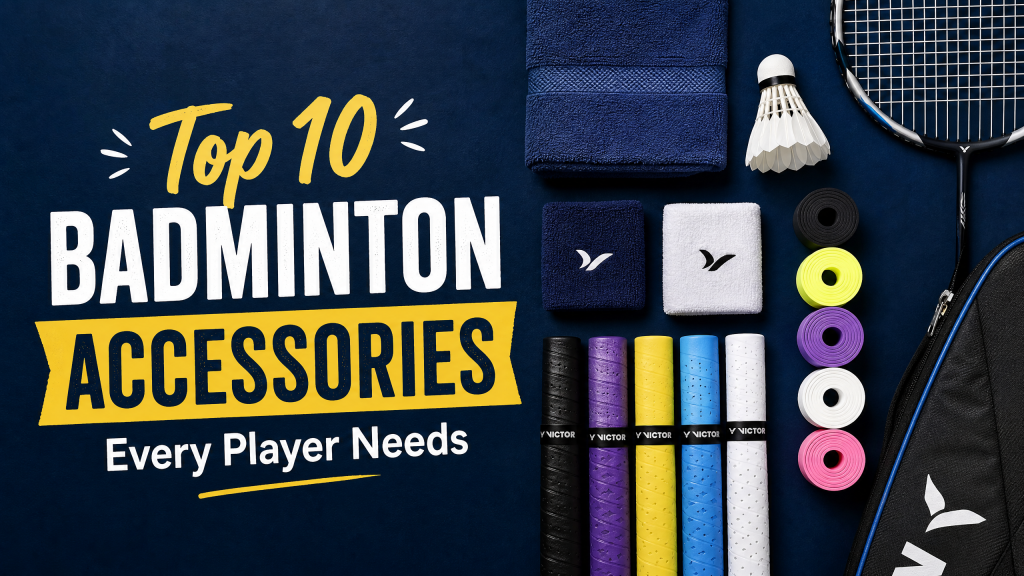
Top 10 Badminton Accessories Every Player Needs
May
Beyond Racket and Shoes: Essential Badminton Accessories Every Player Needs
When people start badminton, they usually focus on two things first: the racket and the shoes. While these are undeniably the foundation of your equipment setup, experienced players know that accessories play a major role in comfort, consistency, injury prevention, and even performance. The right accessories can improve grip, reduce fatigue, organize your gear, and help your equipment last much longer.
Some accessories are absolutely essential for every player, while others are optional upgrades designed for training, recovery, or convenience. The challenge is knowing where to spend your money and where you can safely save.
This guide ranks the most useful badminton accessories from must-have essentials to advanced extras, while explaining how to choose quality products that actually make a difference on court.
1. Overgrips and Replacement Grips
Why They Matter
Your grip is the only connection between your hand and the racket. Even the most expensive racket performs poorly if the grip becomes slippery or uncomfortable.
Factory-installed grips wear out quickly. After repeated sessions, sweat, oils, and friction reduce tackiness and cushioning. This leads to:
- Over-gripping
- Wrist fatigue
- Reduced control
- Blisters
- Slower grip changes
That is why overgrips are considered one of the most important badminton accessories.
Overgrips vs. Replacement Grips
Overgrips
Thin grips wrapped over the original grip.
Advantages:
- Cheap
- Easy to replace
- Better sweat absorption
- Adjustable thickness
Most players use overgrips because they are convenient and customizable.
Replacement Grips
Thicker grips that replace the original grip entirely.
Advantages:
- More cushioning
- Softer feel
- Better shock absorption
However, replacement grips are heavier and alter racket balance slightly.
Popular Grip Options
Top choices include:
- Yonex Super Grap
- Wilson Pro Overgrip
- Toalson Ultra Grip
Replace overgrips every 5–10 sessions depending on sweat levels.
2. Badminton Bags
More Than Just Storage
A proper badminton bag protects your rackets, organizes accessories, and keeps sweaty gear separated from clean clothing.
Using a generic backpack often results in:
- Bent racket frames
- Broken strings
- Poor organization
- Moisture buildup
Dedicated badminton bags solve these problems efficiently.
Types of Bags
Backpack Style
Ideal for:
- Casual players
- Students
- Commuters
- 1–3 rackets
Compact and comfortable.
Tournament Racket Bags
Ideal for:
- Competitive players
- Coaches
- Frequent club players
Features usually include:
- Thermal lining
- Shoe compartments
- Wet clothing pockets
- Multiple racket sections
Features Worth Paying For
Look for:
- Thermal protection
- Strong zippers
- Ventilated shoe compartment
- Waterproof sections
- Padded straps
Top brands:
- Yonex
- Victor
- Li-Ning
- FZ Forza
3. Shuttlecock Tube Holders
Why Storage Matters
Feather shuttlecocks are fragile. Tossing them loosely into a bag bends feathers and ruins flight consistency.
A proper shuttle holder:
- Prevents crushing
- Protects feather shape
- Organizes speed ratings
- Extends shuttle lifespan
For feather players, this accessory is surprisingly important.
4. Wristbands and Headbands
Sweat Management Improves Performance
Sweat is a real performance problem in badminton.
Sweaty palms reduce grip security. Sweat entering your eyes causes distraction and irritation during rallies.
Wristbands help absorb sweat before it reaches your hand while also serving as quick face wipes between rallies.
Headbands prevent forehead sweat from dripping into your eyes.
Choosing Good Wristbands
Look for:
- Double-layer terry cloth
- Strong elastic
- Comfortable compression
- Good absorbency
Avoid ultra-thin cheap versions that become soaked quickly.
5. Badminton Socks
An Underrated Essential
Many players underestimate socks until they develop:
- Blisters
- Foot fatigue
- Hot spots
- Heel slipping
Badminton involves explosive movement and lateral pressure, so specialized socks matter more than most beginners realize.
What Makes Badminton Socks Different?
Good badminton socks include:
- Heel cushioning
- Toe padding
- Arch support
- Moisture-wicking fabric
- Compression zones
Materials often include:
- Coolmax
- Bamboo fiber
- Polyester blends
Avoid ordinary cotton socks because they trap moisture and increase blister risk.
6. Ankle Braces and Compression Supports
Injury Prevention
Ankle injuries are extremely common in badminton due to:
- Sudden direction changes
- Lunges
- Jump landings
Players with previous sprains should strongly consider ankle support.
Types of Support
Compression Sleeves
Light support and improved proprioception.
Lace-Up Braces
More stability for players with recurring injuries.
Rigid Braces
Usually too restrictive for badminton movement.
Knee sleeves are also popular for players dealing with:
- Patellar tendonitis
- Knee soreness
- Joint instability
7. Stringing Accessories and Maintenance Tools
Most players use professional stringing services, but serious players often carry:
- Spare grommets
- Small scissors
- String cutters
- Grip tape
- Mini pliers
Frequent string breakers may eventually invest in home stringing machines.
However, casual players generally do not need advanced stringing equipment.
8. Training Aids
Improve Faster with Specialized Tools
Training accessories help develop:
- Footwork
- Reaction speed
- Power
- Accuracy
- Wrist strength
Popular tools include:
- Agility ladders
- Cones
- Resistance bands
- Rebound boards
- Weighted rackets
- Shuttle launchers
Best Budget Training Tool
Agility ladders are inexpensive and extremely effective for:
- Speed
- Coordination
- Recovery movement
- Court explosiveness
For most players, this is the best value training accessory.
9. Grip Sprays and Sole Cleaning Products
Dusty courts reduce traction significantly.
Grip-enhancing sprays and sticky sole products temporarily restore traction and improve movement confidence.
However:
- Use them moderately
- Avoid damaging court surfaces
- Never use sugary substances
A simple damp towel often works surprisingly well.
10. Electronic Scoreboards and Apps
Not essential, but useful for:
- Club matches
- Tournaments
- Practice sessions
Many players use smartphone apps for:
- Scoring
- Match tracking
- Statistics
- Rally counting
Still, announcing the score verbally remains the standard in badminton culture.
Honorable Mentions
Useful extras include:
- Large water bottles
- Cooling towels
- Mini first aid kits
- Blister pads
- Camera tripods
- Knee pads
- Portable fans
None are mandatory, but they improve convenience and comfort.
Where to Spend Money
Worth Spending On
Spend more on:
- Shoes
- Socks
- Overgrips
- Bags
- Injury prevention gear
These directly affect comfort, safety, and performance.
Safe Areas to Save
You can save money on:
- Water bottles
- Shuttle holders
- Scoreboards
- Generic towels
Expensive branded versions usually provide little extra benefit.
Accessories You Probably Don’t Need
Some products are mostly marketing:
- “Magic” vibration dampeners
- Lucky charms
- Oversized wrist weights
- Extremely heavy training rackets
Focus on practical accessories that improve actual gameplay.
Building the Ideal Accessory Setup
Beginner Setup
- Overgrips
- Socks
- Wristband
- Backpack
- Water bottle
Intermediate Setup
Add:
- Shoe compartment bag
- Training cones
- Compression sleeve
- Shuttle holder
Advanced Setup
Add:
- Thermal racket bag
- Video analysis tripod
- Resistance bands
- Recovery tools
- Backup grips and strings
Final Thoughts
The best badminton accessories are not flashy gadgets — they are tools that improve comfort, consistency, organization, and durability. Small upgrades like quality grips, socks, and wristbands can noticeably improve your playing experience long before you buy a new racket.
Think of accessories as performance multipliers. A comfortable, organized, and injury-free player trains more effectively and improves faster.
Start with the essentials, upgrade gradually, and build a setup that supports your playing style and training habits.
