
Post
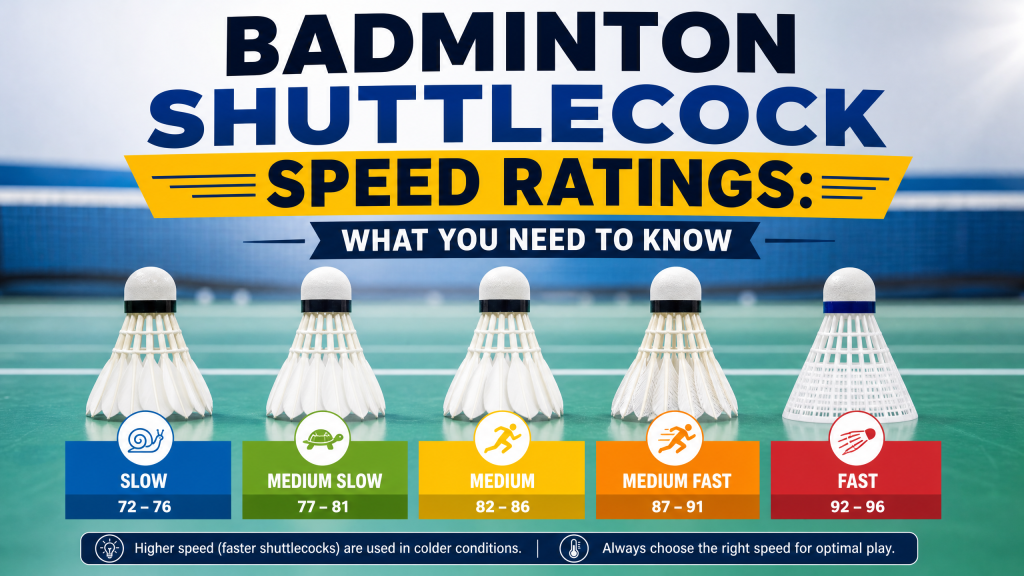
Badminton Shuttlecock Speed Ratings: What You Need to Know
May
Understanding Badminton Shuttlecock Speed Ratings: How to Choose the Right Speed for Every Condition
Many badminton players spend a lot of time choosing the right racket and strings but completely overlook one of the most important parts of the game: shuttlecock speed. Using the wrong shuttle speed can ruin rallies, affect technique, and make matches frustrating instead of enjoyable. A shuttle that is too fast may constantly fly out of bounds, while one that is too slow can make every clear feel exhausting.
Whether you are a casual club player, coach, or tournament competitor, understanding shuttlecock speed ratings is essential. Temperature, altitude, humidity, and indoor climate control all influence how a shuttle behaves during play. Even professional tournaments carefully select shuttle speeds based on local conditions.
This guide explains how badminton shuttle speed ratings work, how to test shuttle speed correctly, and how to choose the proper shuttle for your environment.
Why Shuttle Speed Ratings Matter
Badminton shuttlecocks are designed with different speed ratings to compensate for environmental conditions. Air density changes depending on temperature and altitude, directly affecting how fast or slow the shuttle travels.
If you use the wrong speed:
- Clears may fly too far
- Smashes may go long
- Defensive shots become inconsistent
- Timing feels uncomfortable
- Players develop bad habits trying to compensate
Using the correct speed keeps rallies natural and allows proper technique to develop. It also ensures fair and enjoyable gameplay for all players on court.
For serious players and clubs, shuttle speed selection is just as important as choosing the right racket tension.
Understanding the Shuttle Speed Rating System
Most feather shuttlecock brands use a numerical speed system ranging from 75 to 79.
- 75 = Slowest
- 76 = Slightly slow
- 77 = Standard speed
- 78 = Slightly fast
- 79 = Fastest
The most common speed worldwide is 77 because it suits average indoor conditions at sea level.
Different manufacturers may use different labeling systems, but the concept remains the same.
Common Speed Conversion Systems
| Brand | Slowest | Standard | Fastest |
|---|---|---|---|
| Yonex | 1 | 3 | 5 |
| Victor | 75 | 77 | 79 |
| Li-Ning | A | C | E |
| RSL | 1 | 3 | 5 |
For example:
- Yonex Speed 3 roughly equals Speed 77
- Li-Ning C roughly equals Speed 77
- Yonex Speed 5 roughly equals Speed 79
Always check the shuttle tube label carefully before buying.
How Temperature Affects Shuttlecock Speed
Temperature has a huge influence on shuttle flight because air density changes as the air becomes warmer or colder.
Cold Weather
Cold air is denser, which creates more drag on the shuttlecock. This slows the shuttle down significantly.
As a result, players need faster shuttle speeds such as:
- Speed 78
- Speed 79
Without a faster shuttle, clears may fall short and smashes lose penetration.
Hot Weather
Warm air is less dense, allowing the shuttle to travel faster.
Players should use slower shuttle speeds such as:
- Speed 75
- Speed 76
Otherwise, shots may constantly overshoot the baseline.
How Altitude Changes Shuttle Speed
Altitude affects badminton shuttle speed even more dramatically than temperature.
At higher elevations, the air becomes thinner and offers less resistance. This causes the shuttle to fly faster and farther.
A general guideline:
- Every 300 meters above sea level requires roughly one speed slower
For example:
| Altitude | Recommended Adjustment |
|---|---|
| Sea level | Normal speed |
| 300m | One step slower |
| 600m | Two steps slower |
| 1000m+ | Much slower speeds needed |
If you normally use Speed 77 at sea level, you may need Speed 75 when playing at 1000 meters elevation.
This is why international tournaments often use different shuttle speeds depending on the host city.
Recommended Shuttle Speeds by Conditions
Here is a practical speed guide for most playing environments:
| Temperature / Altitude | Recommended Speed |
|---|---|
| Above 30°C or above 1000m | 75 |
| 25–30°C or 500–1000m | 76 |
| 15–25°C at sea level | 77 |
| 5–15°C | 78 |
| Below 5°C | 79 |
These are general recommendations, not strict rules. Humidity, hall size, and air circulation can also affect shuttle flight.
How to Test Shuttlecock Speed Properly
Even if the shuttle tube says the correct speed, testing is still important because conditions vary from court to court.
The official badminton speed test is simple.
Step-by-Step Shuttle Speed Test
- Stand on the back boundary line
- Hit a full underhand clear using normal technique
- Aim straight toward the opposite baseline
- Observe where the shuttle lands
Correct Result
The shuttle should land:
- Between 0.5 meters and 1 meter short of the opposite back boundary line
If the Shuttle Lands Too Far
The shuttle is too fast.
If the Shuttle Lands Too Short
The shuttle is too slow.
Always test multiple shuttles because manufacturing variations can exist even within the same tube.
Indoor Courts, Air Conditioning, and Climate Control
Modern badminton halls often use air conditioning or indoor heating systems, which can dramatically change playing conditions.
For example:
- Winter outside may be cold, but the indoor court may still be 20°C
- Strong air conditioning in summer can make the court cooler than expected
Because of this, outdoor weather alone is not enough to determine shuttle speed.
Always test shuttle speed inside the actual hall before serious matches or tournaments.
Some clubs even change shuttle speeds between different courts inside the same facility if airflow varies significantly.
What Happens If You Use the Wrong Shuttle Speed?
Using the wrong shuttle speed negatively affects both gameplay and technique.
If the Shuttle Is Too Fast
- Clears fly out easily
- Smashes overshoot
- Net play becomes difficult
- Rallies feel rushed
- Control decreases
If the Shuttle Is Too Slow
- Clears require excessive effort
- Smashes lose power
- Defense becomes tiring
- Arm fatigue increases
- Timing feels unnatural
Many players unconsciously adjust their technique to compensate, which can create bad habits over time.
The correct solution is always choosing the proper shuttle speed rather than modifying your stroke mechanics.
Do Nylon Shuttlecocks Have Speed Ratings?
Yes. Nylon shuttles also use speed ratings, although the labels may differ slightly from feather shuttles.
For example, Yonex Mavis 350 uses cap colors:
- Blue cap = Slow
- Red cap = Medium
- Green cap = Fast
The same environmental principles apply:
- Hot conditions need slower shuttles
- Cold conditions need faster shuttles
However, nylon shuttles are generally less sensitive to temperature changes compared to feather shuttles.
Choosing Shuttle Speeds for Clubs and Bulk Orders
Clubs that purchase shuttles in bulk should consider seasonal changes carefully.
For most temperate indoor environments:
- Speed 77 works year-round
- Speed 76 may help during hot summer months
- Speed 78 may help during winter
Many clubs buy mostly Speed 77 and keep smaller quantities of neighboring speeds available when conditions change.
Proper storage is also important.
Best Shuttle Storage Tips
- Keep tubes in a cool environment
- Avoid direct sunlight
- Store away from excessive dryness
- Maintain moderate humidity
Properly stored feather shuttles can remain usable for years.
Common Myth: Faster Shuttles Are Better for Beginners
Some players believe beginners should use faster shuttles because they travel farther with less effort.
This is actually harmful for skill development.
Faster shuttles encourage:
- Lazy footwork
- Incomplete swings
- Poor timing
- Incorrect clear technique
Beginners should instead use the correct shuttle speed for their environment and focus on proper mechanics.
Learning with realistic shuttle flight develops stronger fundamentals in the long term.
Final Thoughts
Shuttlecock speed is one of the most overlooked aspects of badminton equipment, yet it has a massive impact on gameplay quality. Temperature, altitude, and indoor climate conditions all affect shuttle flight, which is why choosing the correct speed is essential for enjoyable and consistent badminton.
For most players at sea level in moderate temperatures, Speed 77 remains the safest and most versatile option. However, players in hotter climates, colder regions, or high-altitude areas should adjust accordingly.
Testing shuttle speed before each session helps ensure fair rallies, proper technique, and better overall performance. Whether you play casually or competitively, understanding shuttle speed ratings will improve your badminton experience significantly.
