
Post
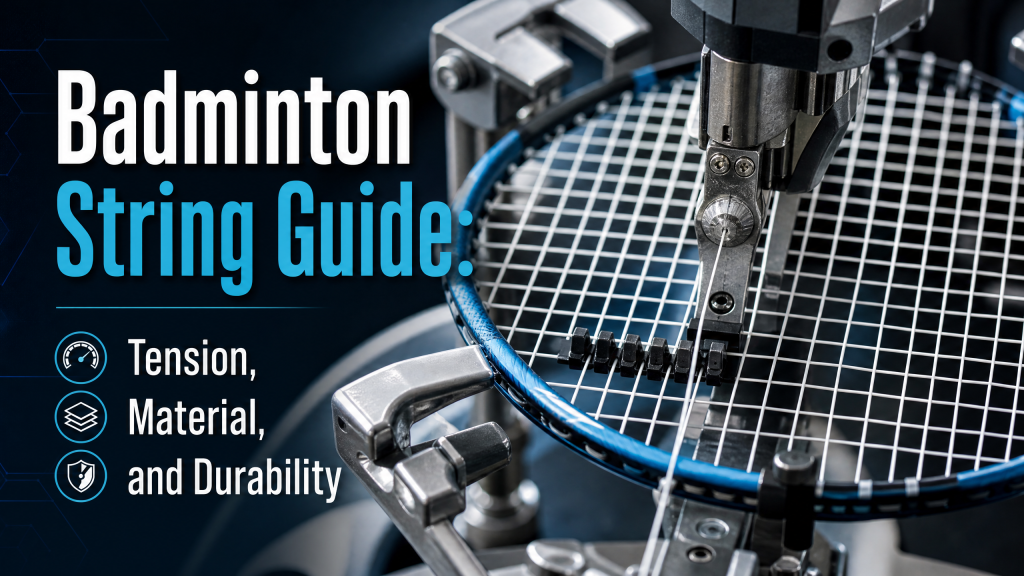
Badminton Strings Guide: Tension, Material, and Durability
May
Why Strings Matter More Than You Think
When players discuss badminton equipment, most conversations revolve around rackets and shoes. Yet one of the most important performance factors is often overlooked. Strings are the only part of the racket that actually contacts the shuttlecock. A simple restring can completely change how your racket feels, sounds, and performs.
The right string setup improves:
- Power
- Control
- Repulsion
- Comfort
- Durability
- Shot precision
Meanwhile, the wrong setup can make even an expensive racket feel dull, weak, or uncomfortable.
Professional players constantly experiment with string types and tensions because small differences significantly affect performance. Fortunately, you do not need professional-level knowledge to benefit from better string choices. This guide explains everything you need to know about badminton , including materials, gauges, tensions, maintenance, and recommendations for different playing styles.
Understanding Badminton String Construction
Modern badminton are highly engineered products designed to balance repulsion, durability, and feel.
Most strings use:
- Multifilament nylon cores
- Braided outer coatings
- High-elasticity fibers
- Special resin treatments
Premium strings may also include advanced materials such as:
- Vectran
- Polyester blends
- High-polymer compounds
These technologies influence how the string behaves during impact.
The Three Main Performance Factors
Every badminton string can be evaluated based on three major characteristics.
1. Repulsion
Repulsion refers to how efficiently the string “kicks” the shuttle off the string bed.
High-repulsion strings:
- Generate easier power
- Feel lively
- Produce sharper sound
- Improve fast drives and smashes
Low-repulsion feel duller but often last longer.
2. Control
Control determines how accurately you can place shots.
Control-oriented :
- Offer more grip on the shuttle
- Improve slicing ability
- Enhance net shot precision
- Increase feedback
These are often preferred by advanced technical players.
3. Durability
Durability measures resistance to:
- Fraying
- Notching
- Tension loss
- Breaking
Durable strings are ideal for:
- Frequent players
- Hard hitters
- Beginners who mishit often
The trade-off is usually reduced repulsion and feel.
String Gauge: Thin vs. Thick Strings
String gauge refers to thickness measured in millimeters.
This is one of the most important choices when selecting strings.
Thin Strings (0.62–0.66mm)
Thin strings provide:
- Maximum repulsion
- Better feel
- Sharper sound
- More shuttle bite
Examples:
- Yonex BG66 Ultimax
- Li-Ning No.1
Advantages:
- Excellent power
- Faster shuttle response
- Better touch shots
Disadvantages:
- Break quickly
- Lose tension faster
- Less forgiving
Thin strings are popular among advanced players and tournament competitors.
Medium Gauge Strings (0.67–0.68mm)
These offer balanced performance.
Advantages:
- Good durability
- Strong repulsion
- Comfortable feel
- Suitable for most club players
This category works best for intermediate players seeking versatility.
Thick Strings (0.69–0.70mm)
Examples:
- Yonex BG65
Advantages:
- Extremely durable
- Stable tension
- More forgiving
- Cost-effective
Disadvantages:
- Less repulsion
- Duller feeling
- Reduced sound
Beginners and frequent recreational players often benefit most from thicker strings.
Understanding String Tension
String tension dramatically changes racket behavior.
Tension is measured in pounds (lbs).
Low Tension (20–24 lbs)
Low tension creates:
- Larger sweet spot
- Easier power generation
- More comfort
- Better forgiveness
This setup helps players who:
- Have slower swings
- Are beginners
- Experience arm pain
- Want easier clears
The shuttle stays on the strings slightly longer, creating a trampoline effect.
Medium Tension (24–27 lbs)
This range is ideal for most players.
It balances:
- Power
- Control
- Comfort
- Precision
Club-level intermediate players typically perform best within this range.
A common setup:
- 25 lbs with repulsive strings
This combination works extremely well for all-around badminton.
High Tension (27–32 lbs)
High tension produces:
- Sharper control
- Cleaner feedback
- Faster response
- Reduced shuttle hold time
However, it also creates:
- Smaller sweet spot
- Harsher feel
- Less free power
Advanced players prefer high tension because they generate their own power through technique and swing speed.
Professional players sometimes exceed 30 lbs, but they also restring constantly and possess elite timing.
For average players, very high tension often hurts performance more than it helps.
String Surface Texture
Not all strings feel the same on contact.
Some strings have smooth surfaces, while others use rough braided textures.
Smooth Strings
Examples:
- Yonex BG65
- Yonex BG66 Ultimax
Characteristics:
- Cleaner contact
- Faster shuttle release
- Softer feel
Ideal for:
- Fast attacking play
- Drives
- Smashes
Rough Strings
Examples:
- Yonex BG80
- Yonex BG85
Characteristics:
- Increased shuttle grip
- Better slice shots
- Enhanced spin
- Stronger control
Ideal for:
- Technical players
- Net specialists
- Deceptive play
The downside is faster wear and slightly harsher feel.
Popular String Models Explained
Yonex BG65
- Gauge: 0.70mm
- Durable and forgiving
- Excellent for beginners
- Maintains tension well
A legendary all-purpose string.
Yonex BG66 Ultimax
- Gauge: 0.65mm
- Extremely repulsive
- Sharp sound
- Excellent feel
One of the most popular strings worldwide.
Yonex BG80
- Rough textured surface
- Excellent control
- Strong shuttle bite
- Slightly harder feeling
Favored by many advanced players.
Li-Ning No.1
- Very thin gauge
- Elite repulsion
- Outstanding touch
- Premium performance
High-end tournament string.
When Should You Restring?
Many players wait until strings break. That is a mistake.
Strings lose elasticity over time, even without visible damage.
Signs You Need Restringing
Watch for:
- Dull sound
- Reduced power
- Loss of control
- Fraying
- String movement
- Dead feeling on impact
Fresh strings always feel more responsive and lively.
Recommended Restring Frequency
Casual Players
- Every 3–4 months
Club Players
- Every 1–2 months
Competitive Players
- Every 2–4 weeks
A common rule:
Restring per year as many times as you play weekly.
Example:
- Play 3 times weekly = restring at least 3 times yearly
Hybrid Stringing
Hybrid setups use different strings in:
- Main strings
- Cross strings
Example:
- Durable mains
- Repulsive crosses
Benefits:
- Custom feel
- Improved durability
- Balanced performance
However, hybrids are more advanced and require experimentation.
Most players perform perfectly well using one consistent string type.
Weather and String Tension
Temperature affects string performance significantly.
Cold weather:
- Raises effective tension
- Makes strings feel stiffer
Hot weather:
- Softens string bed
- Lowers effective tension
Humidity also affects shuttle speed and feel.
Many advanced players adjust tension seasonally:
- Lower in winter
- Higher in summer
String Maintenance Tips
Proper care extends string lifespan.
Best Practices
- Wipe after play
- Store rackets away from heat
- Avoid leaving rackets in cars
- Check damaged grommets
- Rotate between two rackets
- Use proper racket bags
Heat is especially damaging because it weakens nylon fibers and reduces elasticity.
Best String Recommendations by Skill Level
Beginners
Recommended:
- Yonex BG65
- Tension: 22–24 lbs
Focus on comfort and durability.
Intermediate Players
Recommended:
- Yonex BG66 Ultimax
- Tension: 24–26 lbs
Excellent balance of power and control.
Advanced Players
Recommended:
- Yonex BG80
- Li-Ning No.1
- Tension: 27–30 lbs
Optimized for precision and aggressive play.
Final Thoughts
Badminton influence performance far more than most players realize. A well-chosen string setup can make your racket feel faster, more powerful, more controlled, and more comfortable instantly.
Instead of blindly copying professional setups, choose based on:
- Your skill level
- Swing speed
- Playing style
- Physical condition
- Budget
For most club players, a setup like:
- Yonex BG66 Ultimax at 25 lbs
is an excellent starting point.
From there, experiment gradually and keep notes about what feels best. Small adjustments in tension or string type can completely transform your game.
