
Post
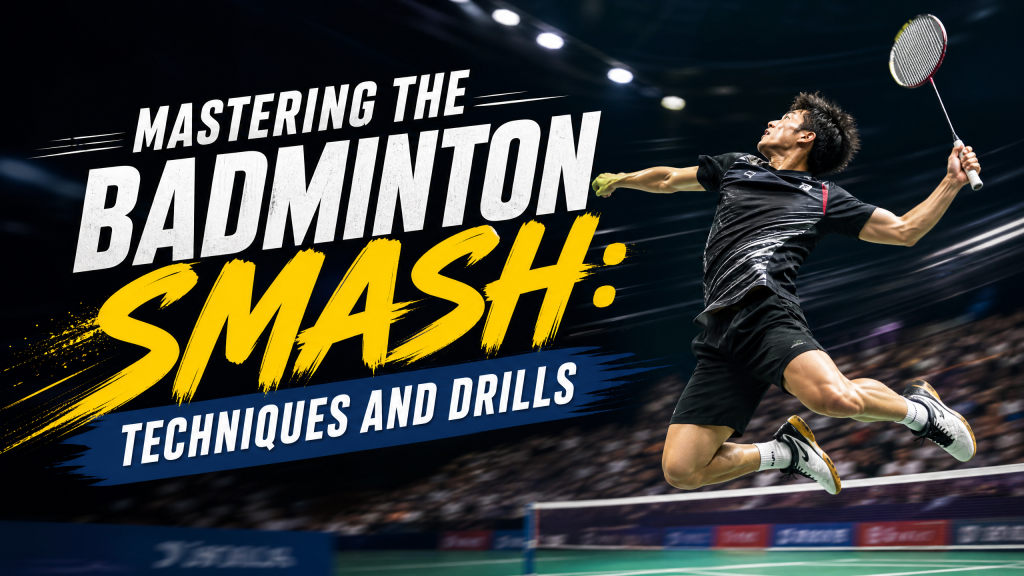
Mastering the Badminton Smash: Techniques and Drills
May
The Smash: Badminton’s Most Devastating Shot
In badminton, no shot creates more excitement or pressure than the smash. It is fast, aggressive, and capable of ending a rally in a single strike. Professional players regularly produce smashes exceeding 300 km/h, making badminton the fastest racket sport in the world. But while the smash looks simple from the outside, executing it correctly requires timing, body rotation, footwork, technique, and tactical awareness.
Many club players struggle with common issues: weak power, poor consistency, flat trajectory, shoulder pain, or slow recovery after smashing. The good news is that a powerful smash is not purely based on strength. Proper mechanics and efficient movement matter far more than brute force. Even smaller players can develop explosive smashes with correct technique.
This guide explains the science and technique behind the badminton smash, including preparation, grip, body mechanics, footwork, placement, conditioning, and training drills. Whether you are a beginner learning your first overhead shot or an intermediate player trying to add more power and accuracy, mastering the smash will dramatically improve your attacking game.
Understanding the Purpose of the Smash
The smash is an attacking overhead shot hit steeply downward into the opponent’s court. Unlike clears or drops, the smash is designed to pressure the opponent immediately and force a weak return or direct winner.
A strong smash does not always mean maximum speed. Smart players vary angle, placement, and rhythm. Sometimes a half-smash or stick smash is more effective than a full-power jump smash because it disrupts timing and conserves energy.
The main goals of a smash are:
- Win the rally outright
- Force a weak lift
- Create attacking opportunities for your partner in doubles
- Push opponents into defensive positions
- Control rally tempo
Understanding these tactical purposes helps players avoid smashing recklessly. Good smashing is strategic, not just powerful.
Grip: The Foundation of a Good Smash
Everything begins with the correct grip. Without proper grip technique, generating power becomes difficult and wrist injuries become more likely.
Use the basic forehand grip:
- Hold the racket like a handshake
- The “V” shape between thumb and index finger aligns with the side bevel
- Keep the grip relaxed before impact
- Tighten only at the moment of contact
One of the biggest mistakes beginners make is using a panhandle grip. This causes limited wrist movement, weak pronation, and flat smashes. A correct forehand grip allows forearm rotation and efficient energy transfer.
Grip pressure also matters. Think of holding the racket at 3 out of 10 pressure during preparation, then squeezing sharply at impact. This relaxed-to-tight motion creates racket head acceleration.
Footwork and Preparation
A smash begins long before contact with the shuttle. Proper preparation allows balance, timing, and maximum power generation.
Ready Position
Start in an athletic stance:
- Feet shoulder-width apart
- Knees bent
- Weight slightly forward
- Racket up in front
When you see a lift from your opponent, immediately perform a split step. This small hop loads your legs and prepares explosive movement.
Moving Behind the Shuttle
One of the golden rules of overhead badminton technique is:
Get behind the shuttle, not underneath it.
Move quickly using chasse steps or crossover footwork. Turn your body sideways to the net with your non-racket shoulder pointing toward the shuttle.
Your non-racket arm should point upward toward the shuttle. This improves balance and helps coordinate body rotation.
If you contact the shuttle too late or behind your body, the smash loses power and angle.
The Biomechanics of a Powerful Smash
The badminton smash uses a kinetic chain, meaning power flows from the ground upward through the body.
Step 1: Leg Drive
Push explosively from the floor using your legs. Strong legs create upward momentum and jumping power.
Step 2: Hip Rotation
Rotate your hips aggressively toward the shuttle. Many players rely only on the arm, but hip rotation generates massive additional force.
Step 3: Torso Rotation
The shoulders follow the hips. This sequence creates a whipping effect.
Step 4: Forearm Pronation
Just before impact, rotate the forearm inward rapidly. This is called pronation and is one of the most important sources of badminton smash speed.
Step 5: Wrist Snap
The wrist snaps downward at impact for extra acceleration and steepness.
Step 6: Follow Through
After contact, continue the racket motion diagonally across the body. A smooth follow-through reduces stress on the shoulder and elbow.
Professional badminton smashes look effortless because the entire body works together efficiently.
The Jump Badminton Smash
The jump badminton smash is badminton’s signature attacking shot. It combines vertical jump, body rotation, and explosive timing.
Key Elements of the Jump Badminton Smash
- Jump upward, not forward excessively
- Contact shuttle at maximum height
- Keep body side-on during preparation
- Rotate explosively during contact
- Land balanced and ready for recovery
The higher the contact point, the steeper the angle. This makes the smash harder to defend.
However, jump smashes consume energy quickly. Use them selectively rather than every rally.
Common Smash Mistakes
1. Hitting Too Flat
A flat smash travels fast but is easy to counter. Aim slightly downward and contact the shuttle earlier.
2. Using Only the Arm
Power should come from legs, hips, torso, forearm, and wrist together.
3. Gripping Too Tightly
Constant tension slows racket speed and reduces whip action.
4. Poor Recovery
After smashing, many players admire their shot instead of recovering. Always return to base position immediately.
5. Incorrect Timing
Contacting the shuttle too late causes weak smashes and shoulder strain.
Recording yourself on video can help identify these issues quickly.
Smash Placement and Tactics
A smart smash beats a hard smash.
Best Smash Targets
- Opponent’s racket shoulder
- Middle between doubles partners
- Rear backhand corner
- Open tramlines
- Body area
Body smashes are particularly effective because they jam the opponent and reduce swing options.
Variations to Use
Full Smash
Maximum power and steep angle.
Half Smash
Reduced speed with more control and deception.
Stick Smash
Shorter swing, faster recovery.
Reverse Slice Smash
Advanced deceptive variation causing curved trajectory.
Using variety prevents opponents from predicting your attacks.
Drills to Improve Your Smash
Shadow Smash Drill
Perform full smash motions without shuttle.
- 20 repetitions
- Focus on rotation and timing
- Practice recovery footwork
Multi-Shuttle Smash Drill
Partner feeds high shuttles repeatedly.
- Smash 10-15 shuttles continuously
- Aim different court targets
- Build endurance and consistency
Smash and Follow-Up
Smash, then move forward anticipating weak return.
Excellent for doubles attack training.
Half-Court Smash Defense
One player attacks while another defends.
Develops placement awareness and rally pressure.
Wall Practice
Hit against a wall focusing on rhythm and contact timing.
Great for solo training.
Physical Conditioning for Smash Power
A stronger body produces faster and safer smashes.
Key Areas to Train
Legs
- Squats
- Lunges
- Jump rope
- Box jumps
Core
- Planks
- Russian twists
- Medicine ball throws
Forearms and Wrist
- Wrist curls
- Reverse curls
- Grip trainers
- Rice bucket drills
Shoulders
- Resistance band rotations
- Rotator cuff exercises
Train explosiveness rather than bodybuilding-style bulk.
Injury Prevention
Smashing repeatedly stresses the shoulder, elbow, wrist, and lower back.
Prevention Tips
- Warm up properly
- Stretch shoulders dynamically
- Strengthen rotator cuff muscles
- Avoid excessive jump smashing
- Use proper technique
- Rest if pain develops
Many injuries come from poor mechanics rather than overtraining alone.
Singles vs. Doubles Smash Strategy
Singles
Smashes must be more selective because recovery distance is larger. Players often use steep half-smashes to create openings.
Doubles
Smashing is constant and aggressive. The rear player attacks while the front player looks for interceptions and net kills.
Doubles smashing emphasizes speed, angle, and sustained pressure.
Learning from Professional Players
Watching elite players helps develop timing and tactical understanding.
Observe players such as:
- Lin Dan
- Lee Chong Wei
- Viktor Axelsen
Notice how they:
- Rotate their hips fully
- Stay relaxed before impact
- Recover immediately
- Vary smash placement
- Use deception
Try to imitate rhythm and movement efficiency instead of raw power alone.
Conclusion
The badminton smash is far more than simply hitting hard. It is a coordinated combination of footwork, timing, body rotation, grip technique, and tactical awareness. Developing a dangerous smash takes patience and structured practice, but the rewards are enormous. A reliable smash transforms your confidence, pressures opponents, and creates attacking opportunities throughout every rally.
Focus first on clean technique and consistency before chasing maximum power. Practice regularly, strengthen your body intelligently, and study professional movement patterns. Over time, your smash will become faster, steeper, and more effective.
Most importantly, remember that the best smash is the one that wins the point — not necessarily the hardest one.
