
Post
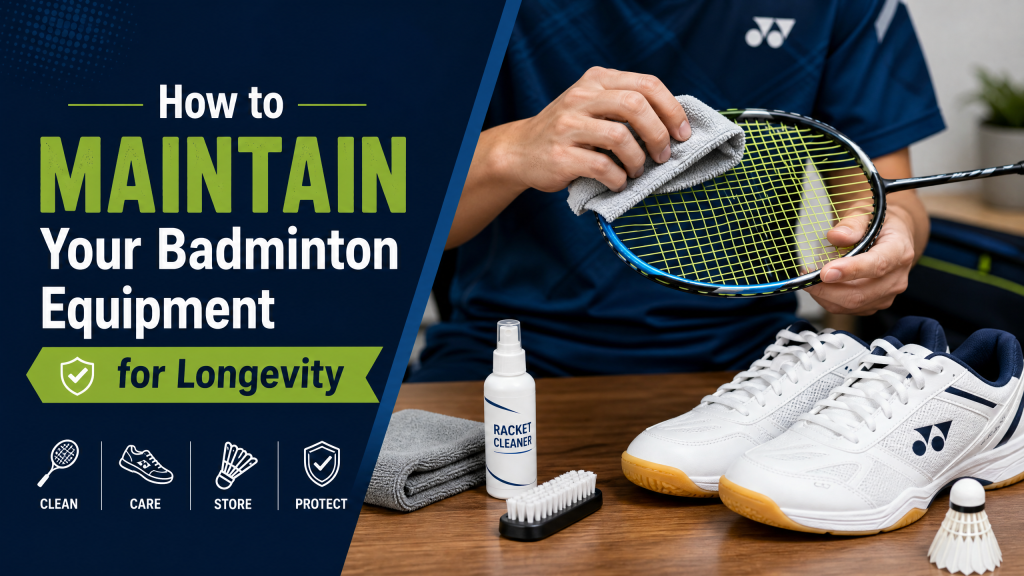
How to Maintain Your Badminton Equipment for Longevity
May
The Ultimate Guide to Badminton Equipment Maintenance: Protect Your Gear and Improve Performance
Badminton equipment can be a significant investment, especially for regular players who use high-quality rackets, premium strings, professional shoes, and feather shuttlecocks. Unfortunately, many players focus heavily on buying good equipment but neglect proper maintenance. Over time, poor care habits can shorten the lifespan of rackets, damage strings, ruin shoes, and reduce overall playing performance.
The good news is that badminton gear maintenance does not require expensive tools or professional expertise. A few simple habits after every session can save hundreds of dollars over time while keeping your equipment performing at its best.
This guide covers everything badminton players need to know about maintaining rackets, strings, shuttlecocks, shoes, bags, grips, and accessories.
Why Badminton Equipment Maintenance Matters
Badminton equipment experiences constant stress during gameplay. Rackets endure powerful impacts, strings lose tension, shoes absorb shock from fast footwork, and shuttlecocks are highly sensitive to humidity and temperature.
Without proper care, players may experience:
- Reduced racket performance
- Frequent string breakage
- Slippery shoes and poor grip
- Warped racket frames
- Damaged shuttle feathers
- Unpleasant odors and bacteria buildup
- Shorter equipment lifespan
Consistent maintenance improves durability, protects performance, and helps players avoid unnecessary replacement costs.
Badminton Racket Maintenance
Your racket is the most important piece of badminton equipment, and proper care significantly extends its lifespan.
Clean the Frame After Every Session
After playing, wipe the racket frame using a slightly damp cloth to remove:
- Sweat
- Dust
- Dirt
- Grip residue
Sweat contains salt and moisture that can slowly damage paint and weaken certain components over time.
Avoid Racket Abuse
Many players accidentally damage their rackets through careless habits.
Never:
- Hit the racket against the floor
- Throw the racket after mistakes
- Lean heavily on the frame
- Clash intentionally during doubles
Even high-end graphite rackets can develop micro-cracks after repeated impacts.
Protect the Racket from Heat
Extreme heat is one of the biggest enemies of badminton rackets.
Never leave your racket:
- Inside a hot car
- Near windows under direct sunlight
- In outdoor storage areas during summer
Temperatures above 40°C (104°F) can weaken graphite resin and deform the frame structure.
Always store your racket inside a badminton bag in a cool indoor environment.
Inspect Grommets Regularly
Grommets protect the strings from direct contact with the racket frame.
Damaged grommets can:
- Cut strings prematurely
- Cause uneven tension
- Increase frame stress
Replace cracked or sharp grommets immediately during restringing.
Reduce Tension for Long-Term Storage
If you will not play for several months, reduce string tension to around 20 lbs. Lower tension reduces constant pressure on the frame and helps prevent warping.
Also avoid leaning rackets against walls for long periods because frame distortion can occur over time.
String Maintenance and Preservation
Strings play a massive role in feel, control, and power. Proper string care helps maintain consistent performance and extends string lifespan.
Wipe Strings After Play
Dust and dirt accelerate string fraying. After each session, gently wipe the strings using a dry or slightly damp cloth.
This simple habit helps reduce surface wear and string notching.
Use String Conditioner
Products like String Thing help lubricate the strings and reduce friction between intersections.
Benefits include:
- Reduced notching
- Longer string life
- Improved string movement
- More consistent feel
Applying conditioner every 3–4 sessions is usually sufficient.
Never Leave Broken Strings Overnight
If a string breaks, cut all remaining strings immediately.
Leaving uneven tension on the racket frame for long periods may:
- Warp the racket
- Create stress imbalance
- Damage frame integrity
Many players ignore this rule and unknowingly shorten racket lifespan.
Rotate Between Multiple Rackets
Using two rackets alternately helps extend string durability because tension loss and wear are spread across both rackets.
This is especially useful for players who train multiple times per week.
Shuttlecock Storage Guide
Feather shuttlecocks are extremely sensitive to humidity and temperature.
Maintain Proper Humidity
Feather shuttles perform best when stored at:
- 15–20°C
- 60–70% relative humidity
Dry environments make feathers brittle and fragile.
Use a Humidity Solution
Players often store shuttle tubes with:
- A humidity pack
- A damp sponge inside a separate plastic bag
- Specialized shuttle humidors
Important:
The moisture source should never directly touch the shuttle feathers.
Never Freeze Shuttlecocks
Some players mistakenly freeze shuttles believing it preserves freshness. In reality, freezing damages feather flexibility and increases brittleness.
Separate Practice and Match Shuttles
Older shuttles with minor feather damage are still useful for:
- Warm-ups
- Drills
- Wall practice
Reserve newer shuttlecocks for serious games and matches.
Badminton Shoe Maintenance
Badminton shoes directly affect safety, movement, and comfort.
Dry Shoes Properly After Play
Always remove insoles after each session and allow both shoes and insoles to air dry.
Storing wet shoes inside a closed bag encourages:
- Odor
- Mold
- Material breakdown
- Sole separation
Clean the Outsoles
Dust buildup reduces court grip significantly.
Use a stiff brush to clean gum rubber soles regularly. Restoring outsole traction improves:
- Stability
- Acceleration
- Stopping control
Never Wear Indoor Shoes Outdoors
Outdoor surfaces contain dirt, gravel, and rough textures that quickly destroy badminton shoe outsoles.
Indoor badminton shoes should only be used on indoor courts.
Replace Insoles Regularly
Even if the shoe exterior looks fine, insoles compress over time.
Replacing insoles every 3–4 months improves:
- Comfort
- Shock absorption
- Hygiene
Check Cushioning and Midsole Rebound
If the midsole feels flat and no longer rebounds when pressed, the cushioning system has worn out.
Playing in dead shoes increases injury risk and reduces movement efficiency.
Badminton Bag Maintenance
A clean bag protects all your equipment.
Empty the Bag Weekly
Remove:
- Used grips
- Dirty socks
- Shuttle debris
- Dust
- Old tape and wrappers
Shake out loose dirt and wipe the interior using disinfectant wipes.
Air Out the Bag
Occasional sunlight exposure helps remove moisture and bacteria, but avoid excessive UV exposure because it can fade fabric and weaken materials.
Repair Zippers Quickly
Broken zippers often worsen if ignored. Small repairs are usually inexpensive and help extend bag lifespan significantly.
Grip and Overgrip Care
Grips directly influence racket control and comfort.
Replace Overgrips Frequently
Old grips become:
- Slippery
- Hard
- Unsanitary
Most players should replace overgrips every 5–10 sessions depending on sweat levels.
Store Spare Grips Properly
Keep unused grips inside sealed ziplock bags to prevent drying out.
Leather Grip Maintenance
Leather replacement grips last longer when treated occasionally with grip conditioner to maintain softness and prevent cracking.
Stringing Machine Maintenance
For players who string their own rackets, machine maintenance is essential.
Key maintenance tasks include:
- Calibrating tension heads every 6 months
- Cleaning clamps with alcohol
- Lubricating moving parts
- Replacing worn gripper pads
- Checking mounting posts for wear
Using incorrect lubricants such as WD-40 can damage machine components and affect tension accuracy.
Net Maintenance Tips
Portable badminton nets also require care.
After Each Session
- Dry the net before storage
- Check for tears or holes
- Inspect cables for rust
For permanent nets:
- Retension monthly
- Wash annually using mild soap
- Replace every few years depending on usage
Store nets away from rodents because they frequently chew mesh material.
Seasonal Storage Tips
If you will not play for an extended period:
- Store rackets indoors in climate-controlled rooms
- Lower string tension to 20 lbs
- Store shoes with crumpled paper inside
- Wash bags and clothing before storage
- Use humidity packs for shuttlecocks
- Remove batteries from electronic training equipment
Check stored equipment every couple of months to prevent unnoticed damage.
Common Equipment Maintenance Mistakes
Many badminton players unintentionally damage their own gear.
Common mistakes include:
- Leaving wet shoes inside bags
- Storing rackets in hot cars
- Ignoring broken grommets
- Washing bags in hot water
- Using incorrect lubricants on machines
- Playing with severely frayed strings
Avoiding these mistakes alone can dramatically extend equipment lifespan.
Final Thoughts
Proper badminton equipment maintenance does not require much time, but it provides enormous long-term benefits. Clean rackets perform better, fresh grips improve control, maintained shoes reduce injury risk, and properly stored shuttlecocks fly more consistently.
A few minutes of care after every session can save players significant money while keeping equipment in excellent condition for years. Whether you are a beginner, club player, or advanced competitor, maintaining your Badminton equipment is one of the smartest habits you can develop.
